



FREQUENTLY ASKED QUESTIONS
Does the Preventive Care Program replace my current health coverage in any way?
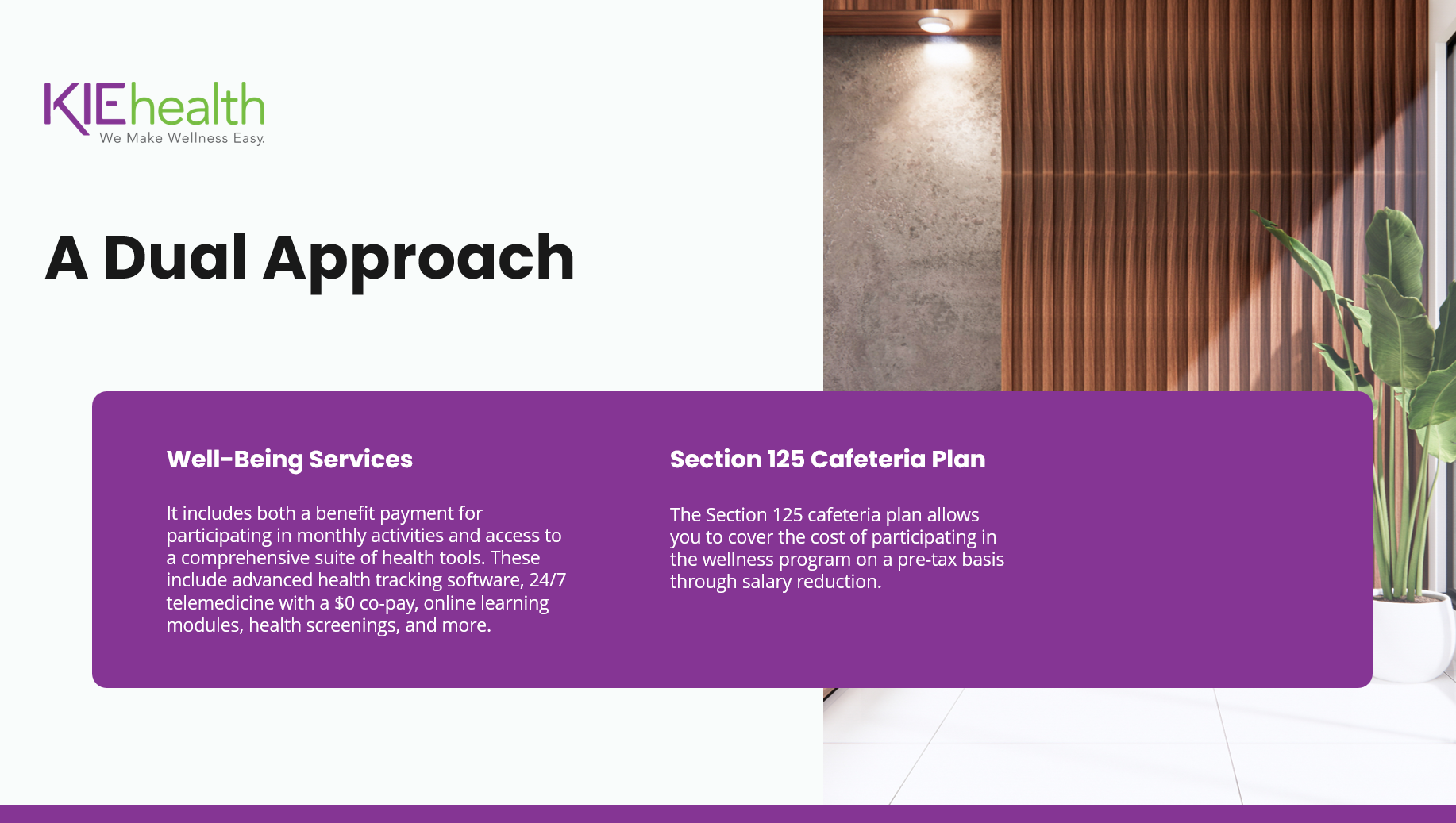
No. The Preventive Care Program supplements and enhances your current health coverage, providing additional coverage for preventive care and wellness. It is a self-insured, voluntary employer-sponsored benefit plan the cost of which is paid through salary reduction on a pre-tax basis through a cafeteria plan sponsored by your employer.
Do I have to be covered under major medical coverage from my employer in order to participate in the Preventive Care Program?
Yes. The law requires your employer to offer group major medical coverage to you in order to offer the Preventive Care Program. The law also requires all persons covered by the Preventive Care Program be covered under your employer’s group major medical coverage or the group major medical coverage of another employer (e.g., a spouse’s employer).
What is the pre-tax deduction on my paycheck?
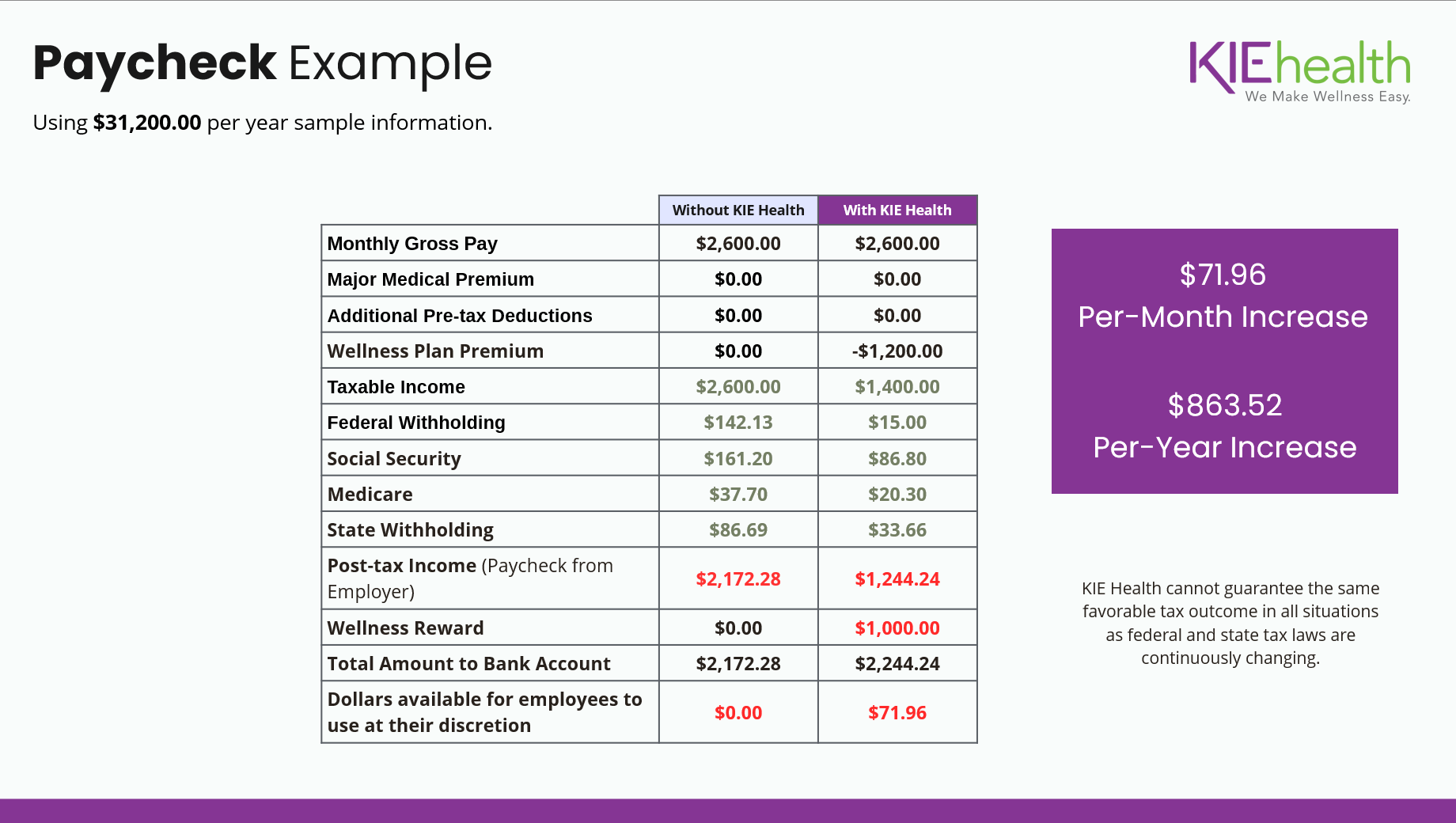
The cost for participating in the Preventive Care Program is paid through a Section 125 cafeteria plan and will be a line item on your paystub as a pre-tax deduction named “Wellness Program” or “Wellness 125” or similar term, depending on our payroll system. The pre-tax deduction reflects the cost to participate in the Preventive Care Program. It is paid by you using pre-tax dollars through salary reduction. This means the amount of your taxable income is reduced, which can lower your overall tax burden. By paying for the Preventive Care Program with pre-tax dollars, you save money on federal income taxes, Social Security, and Medicare taxes. This arrangement can lead to significant savings.
The monthly pre-tax payment amount is typically divided equally among your paychecks. For instance, if your monthly payment is $600 and you are paid weekly, each paycheck will reflect a Wellness 125 pre-tax deduction of approximately $138.46.
What is the Preventive Care Reward or Payment?
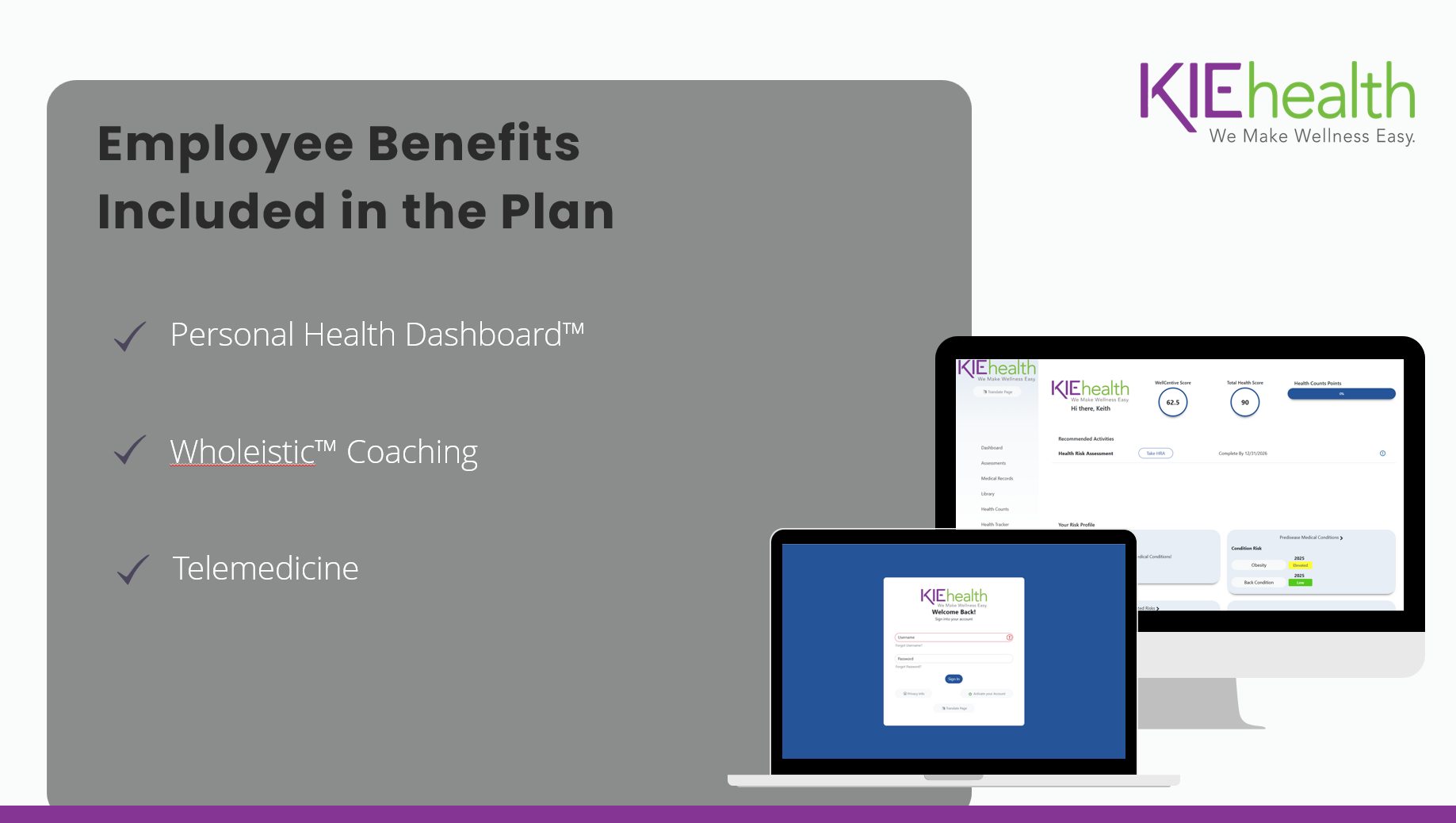
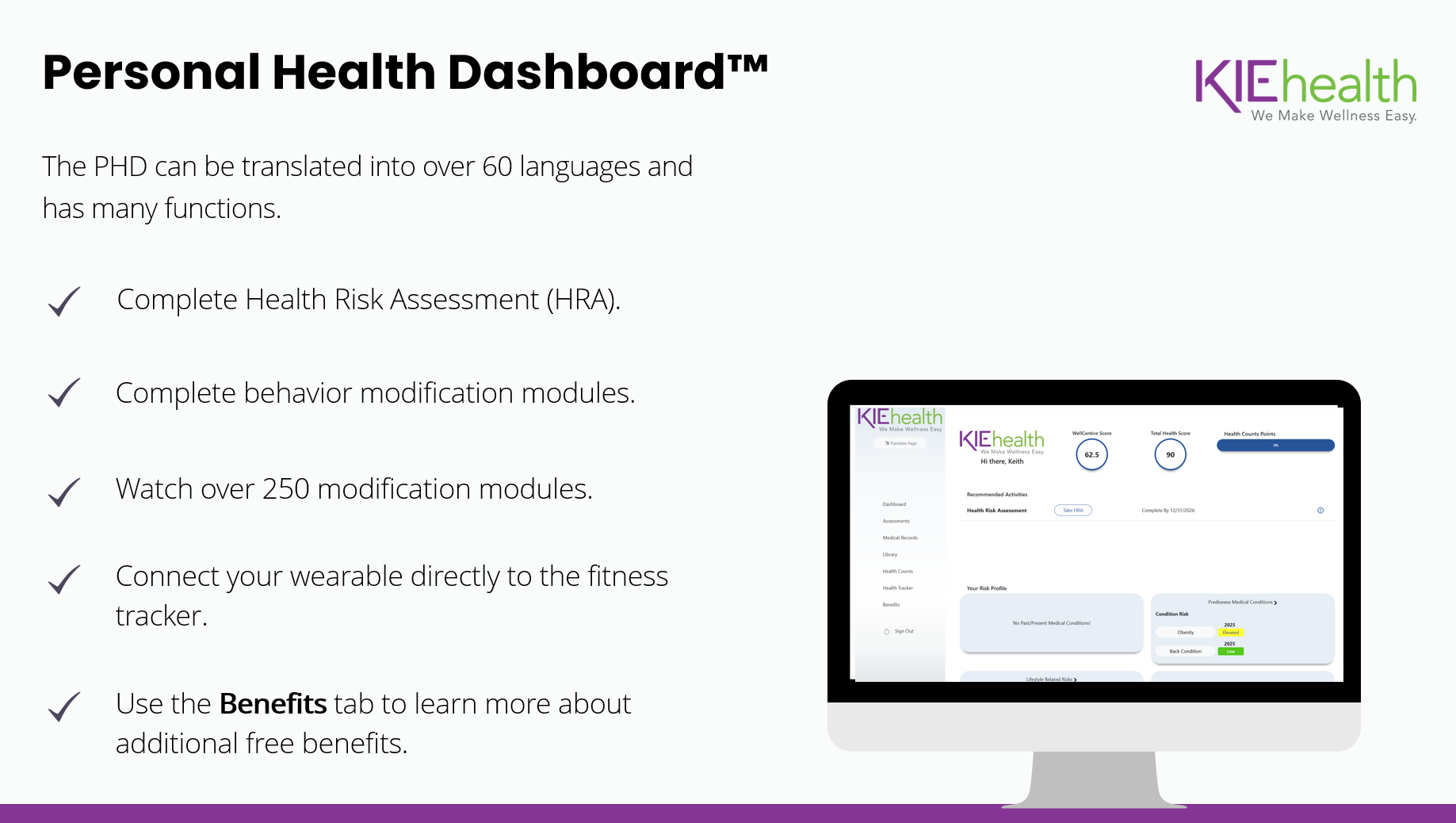
Your Preventive Care Reward or Payment is a set dollar amount you receive for participating in a plan-qualified activity each month. Activities are specified by the plan document and are available to be accessed on your wellness portal, your Personal Health Dashboard TM. These monthly payments reward you for participating in the monthly plan-qualified activity. Your participation in plan-qualified activities is automatically tracked within your Personal Health Dashboard TM.
The Preventive Care Reward or Payment will be a line item on your paystub entitled 125 Wellness Reward (or something similar) and will typically be divided equally among your paychecks. The amount of the Preventive Care Reward or Payment is intended to not be taxable income to you when you receive it. It is added back to your taxable wages after taxes have been applied. For example, if your monthly Preventive Care Reward or Payment is $750, and your employer issues checks weekly, each paycheck will show a line item of 125 Wellness
Reward Payment of approximately $173.08 added back to your paycheck.
Does payment of the Preventive Care Reward or Payment affect my gross wages?
No. Payment of the Preventive Care Reward or Payment does not reduce gross wages. You still earn the same amount from your employer.
Is the Preventive Care Reward or Payment taxable income to me?
The Preventive Care Reward or Payment is intended to not result in taxable income to you. When you receive the Preventive Care Reward or Payment, it is initially treated as non-taxable income. If you incur QMEs (described below) during the calendar year that equal or exceed the amount of the Payments, you have no taxable income. This is determined by you on your individual income taxes as described below.
What are “Qualified Medical Expenses” (QME)?
Section 213(d) of the Internal Revenue Code defines a “qualified medical expenses” (QME) as an expense that can be deducted on your income tax return. Common QME examples of Section 213(d) expenses include out-of-pocket expenses for co-pays, prescriptions, preventive care, dental, vision, orthodontia, health coaching, health education and other wellness activities. Coaching, health education, and certain other wellness activities (massage, cupping, acupuncture, aromatherapy, etc.) are only 213(d) QMEs if they are “medical care.” General health and wellbeing expenses are not “medical care.”
How does my participation in the Wellness Plan appear on my W-2?
The Preventive Care Program is a self-insured preventive care wellness plan with the cost to participate paid through a Section 125 salary reduction. Your total pre-tax deductions will be reflected on your W-2 in box 12 under Code DD. You will not have taxes withheld on the Preventive Care Reward or Payment you receive, and the amount of Preventive Care Reward or Payment is not required to show on your W-2. [Employers may include it as an informational item.]
What information do I need to complete my taxes?
In order to complete your personal income taxes, you will need:
• the total amount of the Preventive Care Rewards or Payments you received during the tax year; and
• the total amount of any out-of-pocket QMEs incurred throughout the tax year that were not paid by, reimbursed through another source (e.g., major medical health coverage, HRA, FSA, or HSA), or claimed as a tax deduction.
The payment of the Preventive Care Reward or Payment from the Preventive Care Program is not intended to be taxable to the employee. You need to track your Section 213(d) expenses that are not paid by, or reimbursed through, another source (e.g., other medical coverage, HRA, FSA, HSA) or claimed as a tax deduction. If those amounts are equal to, or more than, the total Preventive Care Rewards or Payments you received for the same tax year, you have no income from the Preventive Care Program to include. If the amounts received as Preventive Care Rewards or Payments are more than your Section 213(d) expenses that are not paid by, reimbursed through another source (e.g. other medical coverage, HRA, FSA, HSA), or claimed as a tax deduction, the difference is the amount that must be included as income when you prepare you individual income tax returns.
What is the impact of Preventive Care Program on Social Security Benefits?
Participation in the Preventive Care Program may impact an individual’s Social Security benefits. Social Security benefits are based upon earnings that were subject to FICA withholding. Any amounts paid on a pre-tax basis through a cafeteria plan are not subject to FICA withholding. This includes the amount paid pre-tax to participate in the Preventive Care Program. NOTE: The reward paid by the Preventive Care Program is not wages paid by the employer. It is a benefit paid by the plan. There are no FICA withholdings made on that reward.
Assuming a $1,200 premium paid pre-tax through the cafeteria plan, the difference in earnings subject to FICA withholding used for Social Security calculations would be $5,000 without participation and $3,800 with participation (assuming a $1,200 premium).
What are special rules for ESOPs?
Stock owned by a qualified plan, such as stock held in an employee stock ownership plan (ESOP), is NOT considered to be owned by the individual even if it is allocated to the individual’s plan account. Code §318(a)(2)(B).
Informally, the IRS has stated that stock that is subject to a “substantial risk of forfeiture” for purposes of Code §83(a) is not taken into account for determining stock ownership unless the participant has elected under Code §83(b) to recognize as taxable income the excess of the fair market value over the amount paid for the property in the year of transfer. Informal. [Nonbinding remarks, ABA Joint Committee on Employee Benefits, meeting with IRS and Treasury officials, Q/A-45 (May 7, 2004); see also Code §83(c); Treas. Reg. §1.83-3(c) (defining “substantial risk of forfeiture”).]
Can self-employed individuals, partners, and more-than-2% shareholders of S corporations participate in the Preventive Care Program?
No. That is because if you are a self-employed individual, partner, or a more than 2% shareholder of an S corporation, you cannot participate in a cafeteria plan. The wellness plan is funded through salary reduction under the cafeteria plan. The two plans work together. If you cannot participate because you are this type of individual and you have a spouse or parent that can participate, you should check to see whether you can be covered as a spouse or dependent.
How is the requirement of “Qualified Medical Expense” (QME) met, reported, and recorded?
Qualified Medical Expenses (QMEs) under this program are defined by Section 213(d) of the Internal Revenue Code and must be medically necessary expenses that prevent or alleviate a physical or mental defect or illness. Employees must track their own QMEs throughout the tax year to offset Preventive Care Rewards and ensure the reward remains non-taxable. Employers are not required to issue tax forms for Preventive Care Rewards.
If an employee's total QMEs do not meet or exceed their Preventive Care Reward, the excess may be considered taxable income. For The Wellness Preventive Care Plan: The pre-tax deduction is structured to align with IRS-approved wellness benefits, and limits are determined by plan design rather than a specific IRS-set cap. For compliance, the total pre-tax deduction cannot exceed allowable limits for cafeteria plans.
How is the salary reduction related to the benefits I receive under the Preventive Care Program?
The salary reduction is how you pay the cost to participate in the Preventive Care Program. The salary reduction funds the Preventive Care Program. They are used by the Preventive Care Program to provide two types of benefits: (1) the benefit reward payment for completing the monthly wellness activity; and (2) the benefits and services accessible through the extensive suite of wellness benefits also provided under the Preventive Care Program.
How is Preventive Care Plan’s wellness program structured and how does it align with compliance regulations?
Key Points on Wellness Program Design
• There are different types of wellness programs, and some are subject to limits on benefit amounts based on their structure.
• Outcome-based wellness programs, which require employees to reach and maintain specific health targets (e.g., weight, glucose levels), are subject to benefit limits.
• Activity-based or voluntary wellness programs, which do not require achieving specific outcomes, do not have these benefit limitations.
• Voluntary wellness program.
The Preventive Care Plan is a voluntary, opt-out wellness program, meaning:
• Employees are not required to participate unless they choose to stay enrolled.
• To remain compliant, participants must engage in at least one wellness activity per month.
• This requirement can be satisfied through the monthly health newsletter, making compliance easy and accessible for employees.
Payroll Example & Wellness Limitations
• There is no need to change or adjust the payroll example to include any wellness limitations.
• Since this program does not impose health outcome requirements, it does not fall under the restricted categories that require benefit caps.
• The existing payroll calculations remain accurate and compliant as structured.
There is not a 30% maximum benefit limit that applies with this Preventive Care Program, this applies only to “health contingent” wellness plans. The Preventive Care Program is a voluntary, participatory program. It is not subject to the 30% maximum benefit limit.
What does ACA compliance mean when participating in Preventive Care Wellness Program?
The Preventive Care Program is subject to the ACA mandates but cannot meet the requirements on a standalone basis. Therefore, it must be integrated with an employer-sponsored ACA compliant group health plan. In order to be eligible for coverage under the Preventive Care Program, an individual must at all times be covered under an employer-sponsored ACA compliant group health plan. This includes spouses and dependents if they receive benefits through the Preventive Care Wellness Program.
If we decide to move forward but later find that staff participation is low, what are the terms for terminating the contract?
The Preventive Care Program operates under a 12-month participation term for enrolled employees. In general, participation continues until the 12-month period expires. However, employees may be removed if they no longer qualify, which is determined by factors such as termination of employment or loss of eligibility.
Can an employer cancel mid-year?
Employers are generally expected to maintain participation through the 12-month contract term but may discuss exceptions with USHC. Please refer to your Client Services Agreement for additional terms.
Who can participate in a Cafeteria Plan?
NOTE: There are differences in statutes regarding a "participant" and "a person who receives benefits through a participant." Sometimes when referring to both groups, we call them “covered individuals” and define the term.
• A W-2 employee can be a participant and thus participate in a cafeteria plan.
• A legal spouse can be covered under a cafeteria plan only through the participant, they do not possess an independent right.
• A child can also be covered under a cafeteria plan only through the participant, they do not possess an independent right.
“Not an independent right” means there has to be a W-2 employee as a participant in order for the spouse and/or child to receive benefits or to benefit under the cafeteria plan.
Who can participate in a cafeteria plan?
Here’s a general breakdown to help clarify:
Take away: Only W-2 employees may participate in a cafeteria plan. • Performing services does not automatically guarantee eligibility. o Example: Individuals who are more than 2% shareholders of an S Corporation are considered self-employed under IRS regulations and cannot participate in a Section 125 Cafeteria Plan on a pre-tax basis.
o Similarly, LLC owners taxed as partnerships (such as members of multi-member LLCs or sole proprietors) are classified as self-employed and cannot use pre-tax deductions under a cafeteria plan.
o Under IRS Section 125, self-employed individuals are excluded from cafeteria plan participation.
• Only employees receiving W-2 wages are eligible for Section 125 plans. That’s been the consistent IRS position.
Regarding Section 105 Participation:
• Section 105 allows self-employed individuals to participate, but benefits received become taxable.
• This provision does not apply to this particular scenario because Section 105 self-insured medical plans must be funded with pretax salary reductions, which are only permitted through Section 125 cafeteria plans, from which self-employed individuals are excluded.
• In theory, a self-employed person could participate using after-tax dollars, and benefits received would not
be taxable under Section 104. However, this structure is impractical for this type of benefit program.
CAUTION: Special rules apply if dealing with family where some family members are W-2 employees and some are not
(e.g., owners). Often, the family member that is the W-2 employee is “treated as if it was an owner”. In other words, the W-2 employee is “tainted” because of the family member’s status.
Additional Resources:
Refer to your Preventive Care Program Member Packet for details on your program.
Additional Questions?
Contact our benefit specialists for any additional questions about the Preventive Care Program. They can assist you with understanding your benefits, how the plan impacts your paycheck, and any issues with logging into your Personal Health Dashboard.
800.306.3112 M-F 8:00am-5:00pm CT.